Amazon

Building a Forest Sanctuary in the Amazon

A people threatened by degradation fights to protect the Amazon in the interior of Maranhão.

Date:

Location:

Alcântara, Arariboia territory • Maranhão • Brazil

A coastal Amazon forest mosaic in one of the regions with the largest concentration of quilombola communities in Brazil. We work with Indigenous and quilombola communities across the Amazon, building biodiversity corridors and conservation sanctuaries.
Quilombola territories in Alcântara

Alcântara holds the largest quilombola population of any municipality in Brazil. The territory is a mosaic of coastal Amazon forest, mangrove, and transition zones between the Amazon and Cerrado.

Previously cleared for agriculture and impacted by the installation of an aerospace centre, these landscapes are now being restored alongside the communities who have lived here for generations.

Our work focuses on reviving the Pepital River basin, reconnecting mangrove and forest ecosystems, and safeguarding the aquifers that supply surrounding rural communities.
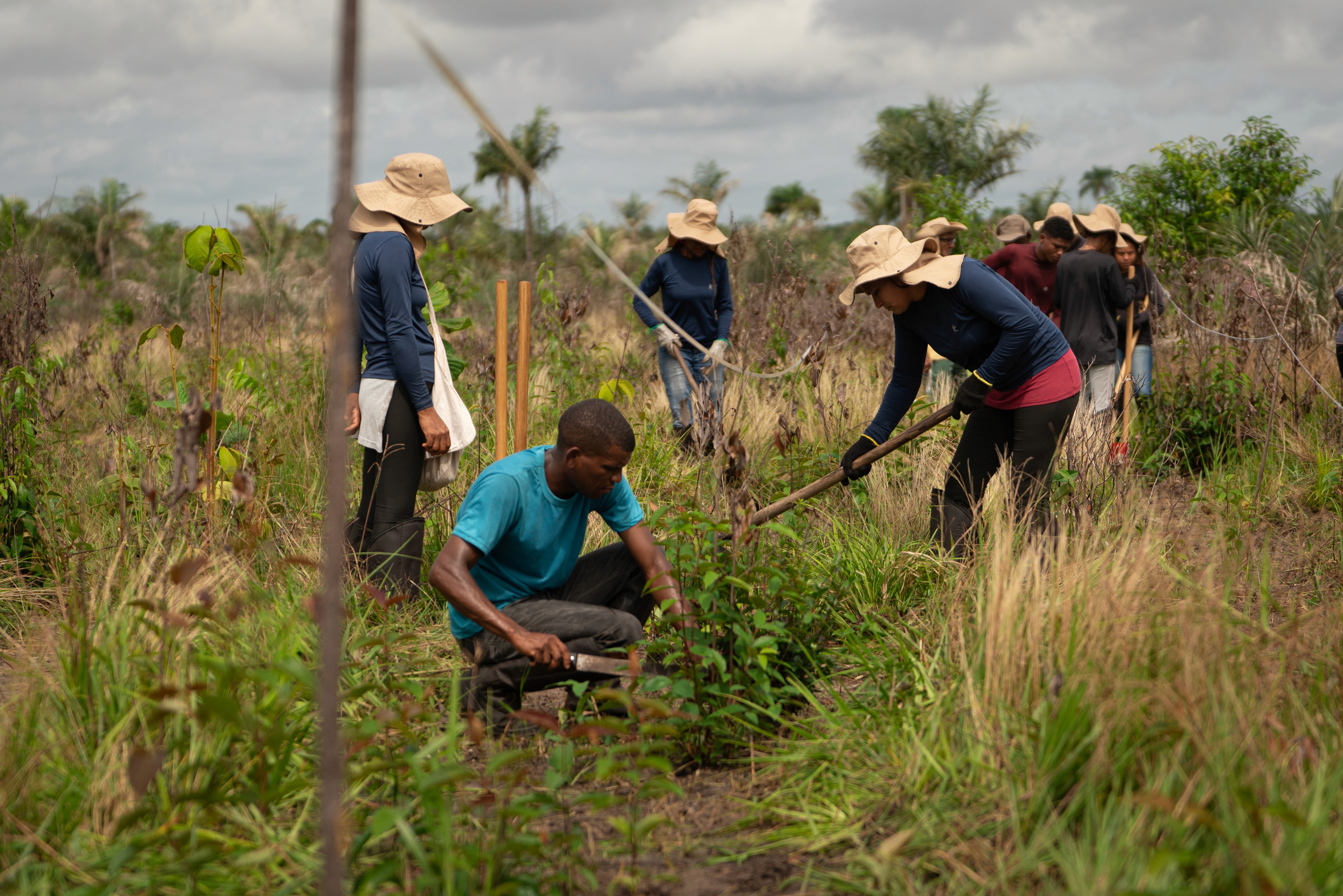


Indigenous territories in the Amazon

In the Território Indígena Araribóia alone, over 1 million trees have been planted alongside Indigenous communities.

The Guajajara people deal with illegal deforestation, land invasions, and natural resource exploitation. These issues accelerate environmental degradation, leading to biodiversity loss and making it difficult for local communities to sustain themselves.

SamaÚma's restoration projects in Arariboia were developed in partnership with the Guajajara, respecting their traditions and knowledge.

Building a biodiversity corridor

Across our Amazon sites, we are managing landscapes to connect restored areas into a continuous biodiversity corridor. Active species monitoring identifies key fauna returning to these corridors. The goal is a self-sustaining conservation sanctuary with permanent ecological surveillance, built and maintained by the communities who know this land.

Your partnership, restoring the Amazon alongside the communities who protect it.

Your partnership, restoring the Amazon alongside the communities who protect it.

Why the Amazon matters

The Amazon is the largest tropical rainforest on Earth. It regulates global climate, stores billions of tons of carbon, and generates atmospheric rivers that control rainfall across South America.

BIODIVERSITY

10% of all known species on Earth live in the Amazon.

CARBON

Stores more carbon per hectare than almost any other ecosystem.

WATER CYCLE

Generates atmospheric rivers that regulate rainfall across South America.

INDIGENOUS STEWARDSHIP

Indigenous territories have the lowest deforestation rates of any land category.

SPECIES
10%
of all known species on Earth live in the Amazon.
CARBON STORAGE
150–200B
tons of carbon stored in Amazon forests.
WATER
20,000+
people depend on the Pepital River basin and surrounding aquifers.

Why the Amazon matters

The Amazon is the largest tropical rainforest on Earth. It regulates global climate, stores billions of tons of carbon, and generates atmospheric rivers that control rainfall across South America.

BIODIVERSITY

10% of all known species on Earth live in the Amazon.

CARBON

Stores more carbon per hectare than almost any other ecosystem.

WATER CYCLE

Generates atmospheric rivers that regulate rainfall across South America.

INDIGENOUS STEWARDSHIP

Indigenous territories have the lowest deforestation rates of any land category.

SPECIES
10%
of all known species on Earth live in the Amazon.
CARBON STORAGE
150–200B
tons of carbon stored in Amazon forests.
WATER
20,000+
people depend on the Pepital River basin and surrounding aquifers.

Potential species in the region

Potential plants
6,000+
Potential plants
Amphibians
60+
Amphibians
Mammals
200+
Mammals
Birds
500+
Birds

Potential species in the region

Potential plants
6,000+
Potential plants
Amphibians
60+
Amphibians
Mammals
200+
Mammals
Birds
500+
Birds

Potential species in the region

Potential plants
6,000+
Potential plants
Amphibians
60+
Amphibians
Mammals
200+
Mammals
Birds
500+
Birds

Key species

The Amazon transition zone hosts species from both cerrado and rainforest ecosystems. Our biodiversity corridor work tracks the return of key fauna to restored areas.

SamaúmaVU

Samaúma

Ceiba pentandra

The tree that gives our organization its name. One of the tallest in the Amazon. Sacred to many traditional communities.

Açaí PalmVU

Açaí Palm

Euterpe oleracea

Vital for community income and nutrition. Combines ecological and economic goals.

Howler MonkeyLC

Howler Monkey

Alouatta belzebul

Seed disperser and canopy indicator. Vocalizations tracked by our bioacoustic monitors.

Babaçu PalmVU

Babaçu Palm

Attalea speciosa

Central to quilombola livelihoods. Oil, charcoal, and food production.

Scarlet MacawLC

Scarlet Macaw

Ara macao

Depends on large intact trees. Its return signals forest maturity in restored areas.

AndirobaLC

Andiroba

Carapa guianensis

Medicinal and economic value. Used by quilombola communities for centuries.

Key species

The Amazon transition zone hosts species from both cerrado and rainforest ecosystems. Our biodiversity corridor work tracks the return of key fauna to restored areas.

SamaúmaVU

Samaúma

Ceiba pentandra

The tree that gives our organization its name. One of the tallest in the Amazon. Sacred to many traditional communities.

Açaí PalmVU

Açaí Palm

Euterpe oleracea

Vital for community income and nutrition. Combines ecological and economic goals.

Howler MonkeyLC

Howler Monkey

Alouatta belzebul

Seed disperser and canopy indicator. Vocalizations tracked by our bioacoustic monitors.

Babaçu PalmVU

Babaçu Palm

Attalea speciosa

Central to quilombola livelihoods. Oil, charcoal, and food production.

Scarlet MacawLC

Scarlet Macaw

Ara macao

Depends on large intact trees. Its return signals forest maturity in restored areas.

AndirobaLC

Andiroba

Carapa guianensis

Medicinal and economic value. Used by quilombola communities for centuries.

Collected on site
Our field app captures soil composition data at every planting area. Ground-level diagnostics, not remote estimates.
100+
native species used in Amazon restoration programs. Biodiversity designed into the planting from the start.
CONTINENTAL REACH
he Amazon generates atmospheric rivers that deliver rainfall across South America. Restoration here reaches far beyond Brazil.

Collected on site
Our field app captures soil composition data at every planting area. Ground-level diagnostics, not remote estimates.
100+
native species used in Amazon restoration programs. Biodiversity designed into the planting from the start.
CONTINENTAL REACH
he Amazon generates atmospheric rivers that deliver rainfall across South America. Restoration here reaches far beyond Brazil.

Sustainable Development Goals

1No Poverty
2Zero Hunger
5Gender Equality
6Clean Water
8Decent Work
13Climate Action
15Life on Land